Jonathan Pallant’s Neotron Pico Turns the Raspberry Pi Pico Into a Full-Size ATX PC Motherboard

Based on the earlier Neotron 32, the Neotron Pico is an RP2040 home computer straight from the ’80s but compatible with modern cases.

Embedded Rust developer Jonathan Pallant is taking the popular Raspberry Pi Pico microcontroller board in a new direction: a simplified home computer, complete with a motherboard compatible with ATX cases.

Released earlier this year, the RP2040-powered Raspberry Pi Pico has been a stellar success. Despite being designed primarily for embedded microcontroller applications, it’s found a home in a range of unusual projects — like a visual synthesiseran interactive MicroPython-based computer for your deskanother for your pocketan emulated BBC Microan emulated 80186 PC, and even a Nintendo Entertainment System.
Read more…

This RaspberryPi – Based Parking Lot Monitor Detects Unauthorized Vehicles

For a university project, Codrin used a Raspberry Pi to create a system that detects unauthorized vehicles.

The United States is a car culture and most Americans have to own a car to commute to work and get around. As a result of that fact, parking lots are everywhere. You don’t just need a parking spot for your car at home, but also at work and every other place you go. In Jackson, Wyoming, for example, there are 27.1 parking spots for every household. Despite that, private parking lots are common and owners need a way to ensure that only authorized vehicles enter the lot. For a university project, Codrin used a Raspberry Pi to create a system that detects unauthorized vehicles.

Read more…

Arduboy on ATMega4809

Porting Arduboy to the ATMega4809 and making it run on a Arduino Nano Every.

After learning about the Arduboy challenge, we (team Karooza) decided to join in the fun and port Arduboy to a new microcontroller. In the spirit of staying with true 8 bit gaming we chose the ATMega4809. This relatively new microcontroller is also used in the Arduino Nano Every, making it available to the average maker. For this very reason we also chose the Nano Every as our initial target. Then we designed a PCB which handles battery charging, boosting to 5V and breaking out the buttons, LEDs and piezo speaker. Using slightly off-center pads the Nano (with headers) can plug into the breakout board without needing to solder it (a cool idea we borrowed from the Curiosity Nano board).

Read more…

DarkfullDante’s Flight Sim Switch Box Is Powered by a Raspberry Pi Pico Running CircuitPython

Driven by a combination of hid_gamepad and hid_keyboard, the switch is designed for use with Microsoft Flight Simulator and Elite Dangerous.
Pseudonymous developer “DarkfullDante” has put together a low-cost switch board for flight simulators, powered by a Raspberry Pi Pico running CircuitPython and housed in an attractive and sturdy case.

Read more…

DIY Tiny Handheld Computer Puts BASIC in the Palm of Your Hand

It may not be practical, but it’s at least functional!

This project puts the power of BASIC in your hands, literally. Designed by Anders Mygind, this tiny handheld computer runs a modified version of TinyBasic and is built around the ATmega328-PU, a chip similar to the ones used in the Arduino Uno. Though it’s not exactly user-friendly, both the keyboard and screen actually work. The device utilizes 12C-communication with the display and a button-matrix for the keyboard.

Read more…

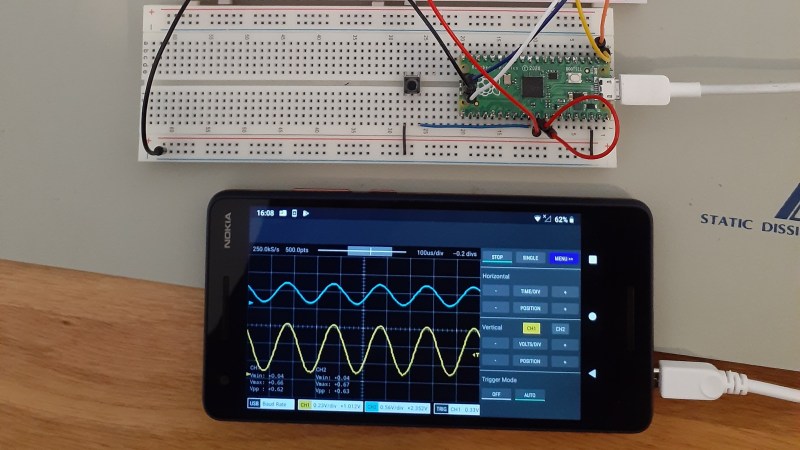
RaspberryPi Pico Oscilloscope

As you dive deeper into the world of electronics, a good oscilloscope quickly is an indispensable tool. However, for many use cases where you’re debugging low voltage, low speed circuits, that expensive oscilloscope is using only a fraction of its capabilities. As a minimalist alternative for these use cases [fhdm-dev] created Scoppy, a combination of firmware for the Raspberry Pi Pico and an Android app to create a functional oscilloscope.

Read more…

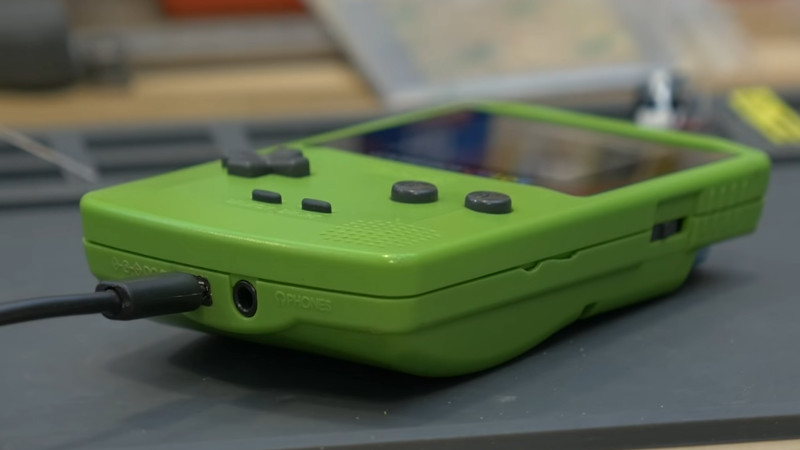
Gameboy Color Gets a Rechargeable Battery

Nintendo’s classic Game Boy has long been the darling queen of the handheld scene. However, with many fans modifying their handhelds with power-sucking features like modern backlit LCDs, running on AA batteries can become a frustrating exercise as they rapidly run out. [esotericsean] gets around that by modifying his Game Boys with a USB rechargeable battery setup. (Video, embedded below.)

The hack is a simple one, but the execution is quite tidy. [esotericsean] starts by removing the original DC jack from the Game Boy motherboard, and hogs out the hole in the case to fit a micro USB port. The original battery housing is similarly carved out to suit a 2000 mAh lithium-polymer pouch cell. A single-cell charging board is used to manage the battery, with its original connector removed and replaced with a neater-looking panel mount micro USB port instead. The electronics is then wrapped up in Kapton tape and stuffed inside the shell as everything is put back together.

Read more…

Homemade CNC Drawing Machine

Servos, CD player parts, and wine boxes complete this unique three-axis plotter.
Popular Instructables creator tuenhidiy has come up with a unique CNC machine, which can be seen demonstrated in the video below drawing several nice pictures. The machine runs GRBL firmware, and features a fairly standard X axis gantry setup with a movable table for the Y axis. For the Z component, it lifts its drawing instrument up with drive parts from a CD player.

Read more…

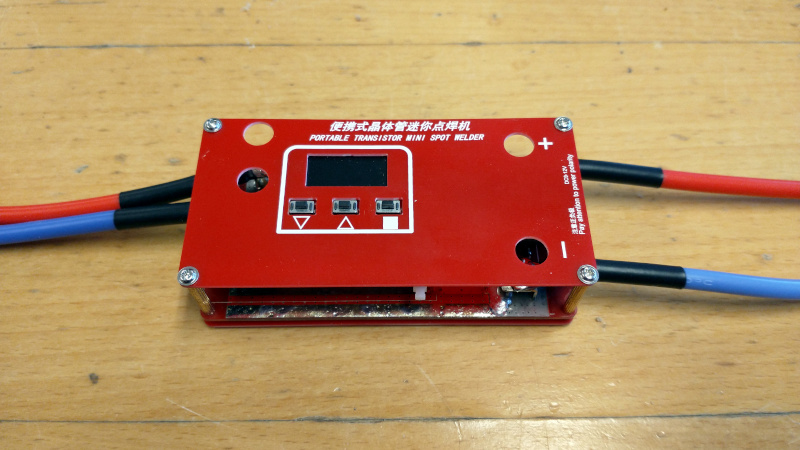
Review: Battery Spot Welders, Why You Should Buy a Proper Spot Welder

Making battery packs is a common pursuit in our community, involving spot-welding nickel strips to the terminals on individual cells. Many a pack has been made in this way, using reclaimed 18650 cells taken from discarded laptops. Commercial battery spot welders do a good job but have a huge inrush current and aren’t cheap, so it’s not uncommon to see improvised solutions such as rewound transformers taken out of microwave ovens. There’s another possibility though, in the form of cheap modules that promise the same results using a battery pack as a power supply.

Read more…