
Today we look at my new file server for The Cave, and what a glorious machine it is! Sent in by Ralph from https://www.youtube.com/channel/UCjUM… – He has combined a modern server build with a 1993 PC case with wonderful results.
External News
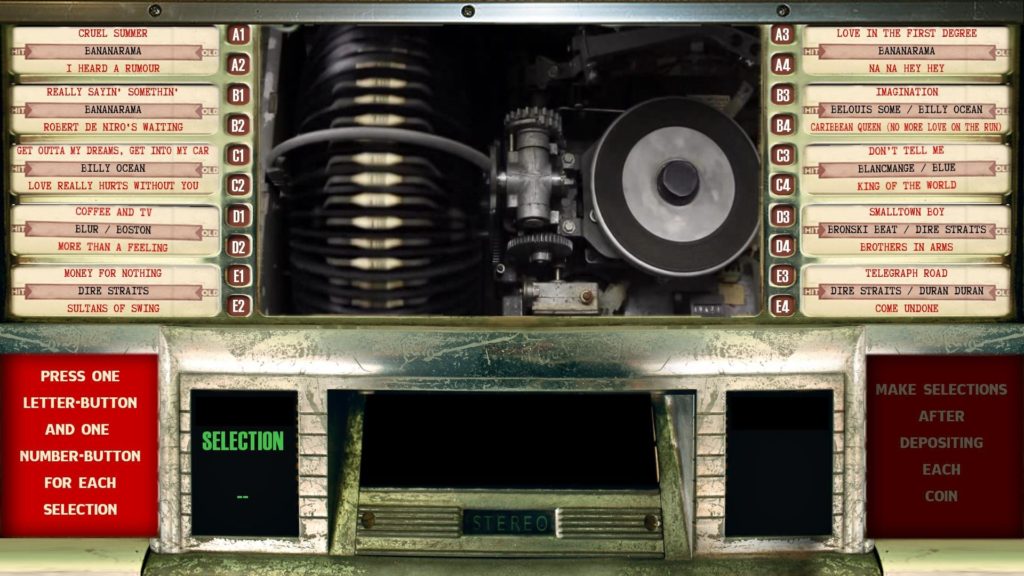
RaspberryPi fruitbox – MP3 Jukebox
Raspberry Pi fruitbox
fruitbox is a customisable MP3 player for the Raspberry Pi, allowing the user to create the look and feel of classic jukeboxes.
An SD image file is available here:
https://www.dropbox.com/s/bc1r0ypwrvaqln4/rpi-fruitbox-v1.16a.img.zip?dl=0
Just download the image, and burn it onto a SD card (using balenaEtcher for example on a Windows PC). Then put all your MP3 files onto a USB memory stick, plug into the Pi (any model except Pi4) and then power up! If you want to use touchscreens, remap your buttons or create your own skins, then you’ll need to read the userguide.txt to find out how. The default keys are also detailed in the userguide.
Is the Nvidia Shield Still The Best Android TV? Should you Buy One In 2020?
Is the Nvidia Shield Android TV still the best Android TV?
Let’s find out In this video we test out some 4K video playback Native and streaming, take a look at Geforce now, some native android games like real racing 3 and half-life 2 then wrap it up with some emulation using PPSSPP for PSP and Redream for Dreamcast.
I’ve tested a lot of cheaper and expensive android tv boxes along with a ton of single-board computers running Android Tv and overall the Shield is defiantly my go-to choice.
The new #ESP32-S2: How relevant is it for the Makers? First tests
When the ESP32 came to the market, it was well equipped: Wi-Fi, Bluetooth, two fast cores, an ultra low power core, lots of pins, etc. One thing, however, was lacking: Native USB support like the SAMD processors, for example. This changed with the new ESP32, the ESP32-S2. Here I have two development boards. Let’s look if it is the same “killer” as the first ESP32 was.
Making a miniature IBM 1401 scale model. Scratch build, no 3D printing allowed here! OC
This is an IBM 1401 scaled model I am working on, part of a diorama. It is a scratch build made of polystyrene mostly.
I make everything by hand, no 3D printing involved.
The IBM 1401 is a computer from 1959, considered to be the first successful mass produced computer. I have been working on this miniature diorama since December last year, to celebrate its 60th anniversary.
https://en.wikipedia.org/wiki/IBM_1401

What is I2C? | Protocol Guide
I2C, or Inter-integrated Circuit, is a communications protocol common in microcontroller-based systems, particularly for interfacing with sensors, memory devices and liquid crystal displays. Similar to SPI, it’s a synchronous protocol because it uses a clock line. The I2C protocol, however, uses less pins and is a much more robust standard.

Use an Arduino to Build an Electronic Connect Four Game
Connect Four (sometimes marketed as “Connect 4”) was first published by Milton Bradley in 1974. It’s a two-player game where the players take turns dropping discs into a grid. The goal of the game is to get four of your discs in a line vertically, horizontally, or diagonally. It’s a fun game that can be quite challenging despite the deceptively simple rules. Unfortunately, the fun doesn’t last long before you inevitably lose some of the discs. Kelly Bodeman and Jack Whelan used an Arduino to create an electronic Connect Four game that ditches those discs entirely, and they have posted an Instructables tutorial explaining how you can build your own.
Pandauino Narrow Family Brings Arduino Mega-Like Power to an Arduino Nano-Style Form Factor
New ATmega644 and ATmega1284-based boards boast the power — though not pins — of a Mega in a footprint only slightly larger than the Nano.
Catalonian maker Thierry Guennou’s Pandauino has launched what he claims is the smallest ever breadboard-compatible development boards to feature the Microchip ATmega644 or ATmega1284 microcontrollers.
“644 Narrow and 1284 Narrow are the simplest and perfect upgrade option for all your small footprint Arduino projects,” Guennou claims of his designs, which use microcontrollers more commonly associated with large boards like the Arduino Mega. “The Narrow board gives you two to eight times more flash and RAM resources as compared to a Uno/Nano, plus total compatibility.”
My DIY Home Assistant Garden Automation System – Climate Control, Dosing, and More. Pt.1 – Hardware
This is a quick peek at the hardware portion of the DIY garden automation system I’ve been slowly building over the past year or so. Currently, the system is managing climate control, doing pH and nutrient dosing, fertigation schedule, light cycle, and has flood detection capability. It’s a work in progress and I’ll be sharing more about it as I go.
Premium Pi4 Case CNC Machined Full Aluminum Made In The USA Passive Cooling
Let’s take a look at a really nice Premium Case for the Raspberry Pi 4. This case is made by Desalvo Systems in the USA and is CNC machined to perfection! IN this video I test out this CNC aluminum case to see how well it cools the Raspberry pi 4 with and without an overclock.