
RLCRAFT is tough, and if you’ve watched my RLCraft series, you’ll know I’m pretty bad at it. So, I TRIED to survive Hardcore RLCraft for 100 Days and This is What Happened. The original idea cme from LukeTheNotable who graciously gave me permission. I previously Survived 100 Days of
External News
Raspberry Pi Cluster Ep 2 – Setting up the Cluster
In this video, I show how to build the hardware for a Raspberry Pi Cluster, and how to flash microSD cards or the eMMC storage built into a Raspberry Pi Compute Module.
I compare the experience of building the hardware for a traditional Raspberry Pi model B cluster versus building a Turing Pi cluster with Compute Modules.
I also explore why it takes a little extra work to flash a Compute Module’s eMMC storage, but why it’s worth doing it.
8GB RaspberryPi 4 on sale now at $75
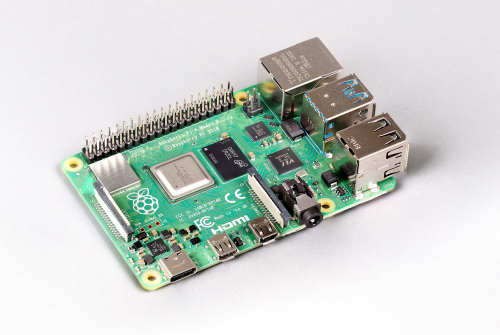
Raspberry Pi 4 is almost a year old, and it’s been a busy year. We’ve sold nearly 3 million units, shipped a couple of minor board revisions, and reduced the price of the 2GB variant from $45 to $35. On the software side, we’ve done enormous amounts of work to reduce the idle and loaded power consumption of the device, passed OpenGL ES 3.1 conformance, started work on a Vulkan driver, and shipped PXE network boot mode and a prototype of USB mass storage boot mode – all this alongside the usual round of bug fixes, feature additions, and kernel version bumps.
While we launched with 1GB, 2GB and 4GB variants, even at that point we had our eye on the possibility of an 8GB Raspberry Pi 4. We were so enthusiastic about the idea that the non-existent product made its way into both the Beginner’s Guide and the compliance leaflet.
Samsung Galaxy Z Flip Durability Test – Fake Folding Glass?!
Today we find out how durable Samsungs new Galaxy Z Fold really is. Grab your Robot Camo dbrand skin HERE: http://dbrand.com/robotcamo Samsung has pitched this phone as a folding glass phone that ‘bends the laws of physics’ But… is folding glass actually possible? The only way to find out is with a scratch test. Overall I’m impressed with the Galaxy Z Flip. If they change the name of their screen material to something besides glass I would give it a 10/10 as far as folding phones go. The only physical characteristic this screen material shares with actual glass is the clarity. And I dont think thats fair to consumers. At all. Let me know what you think in the comments.
Nintendo Switch DOCK with GameCube Ports and Bluetooth Built in – BROOK POWER BAY
Hi, this in depth video shows a Brook Power-Bay Nintendo Switch Dock. This small dock packs in 2 GameCube controller ports, 2 USB ports and allows 2 separate Bluetooth headphone connections.
Rain Gutter POWER #2 – 3D Printed Alternator vs. DC Generator for More POWER From the Rain!
This is Part 2 of my series on generating power from my rain gutters. This was a huge effort but I’m happy to say it paid off. Please like and subscribe.
The History of Popeye in video games – Arcade/console documentary
I covered the entire history of Popeye in video games from his start in the 1982 Nintendo classic all the way to the present.
Turbo Grafx 16 Mini unboxing and review
The TurboGrafx-16 Mini, also known as the PC Engine Mini (PCエンジン mini, Pī Shī Enjin mini) in Japan and PC Engine CoreGrafx Mini in Europe, is a dedicated home video game console by Konami modeled on NEC’s TurboGrafx-16, which was designed by Hudson Soft, a video game developer which Konami acquired in 2012. The Mini emulates the original console’s 16-bit hardware. The Japanese model contains 58 games total while the international models contain 57.
RetroPie 4.6 Attractmode Gaming and Dual Screen Possibilities
Retropie for the Raspberry 4 update. Soon you’ll be able to update your current image/build to attract mode. The supreme team will be releasing installer to add this to your current image higher than beta 4. With attract mode comes the possibility of dual screen gaming. Some of you have already noticed Pi4 features with pixelcade and wheel art selections being available as well
Introducing the Arduino Portenta H7
Designed for demanding industrial applications, AI edge processing, and robotics, the Arduino Portenta family is a new standard for open high-density interconnect to support advanced peripherals.
The first member of the family is the Portenta H7 module – a dual-core Arm Cortex-M7 and Cortex-M4 operating at 480MHz and 240MHz, respectively, with an operational temperature range of -40 to 85°C. The Portenta H7 is capable of running Arduino code, Python, and JavaScript, making it accessible to an even broader audience of developers.