Zero Crossing’s Knucklehead Is a “Classic Twin-T Filter” Synth You Can Play with Your Face

Designed to mimic the synthetic percussion generators of the ’80s, the Knucklehead is a super-simple music-making marvel.

New York-based electronic music specialist Zero Crossing has launched the Knucklehead, a compact percussion generator based on the vintage “twin T-filter” configuration.

“Knucklehead (KH) is a device that utilizes the classic ‘Twin-T Filter’ configuration found in many of the 1980’s approaches to a synthetic drum/percussion generator with a very high Q resonance,” the device’s creator explains, “that can be triggered into oscillation when ‘excited’ and ultimately returning to stability, creating the decaying ‘envelope’ associated with percussive instruments.”

Read more…

World’s Worst Smartwatch

The Singularitron is something of an oddity, to put it lightly. It is simultaneously the worst smartwatch I have ever seen, and also an interesting, highly novel piece of hardware with a certain je ne se quois that has me pining to get my hands on one. Unfortunately, you cannot just pick up a Singularitron at your favorite retailer… well, possibly if your favorite retailer is Sanford and Son Salvage, but aside from that, you have to build your own. Comfortable with that? Well, you still probably cannot make one, because the display has not been manufactured for many years. Impractical? Yes, absolutely, but that is just what developer Zack Freedman was shooting for with this wonderful, awful smartwatch that was designed primarily to be an eye-catching piece for conferences.

Read more…

Making a Multiplexed Flip-Dot Display

Flip-dot displays, which use a matrix of actuators to move mechanical pixels into place, are very interesting. At one time they were even very common for transportation displays and the like, where information changes only incrementally.

While modern makers do experiment with such displays, the basic problem with setting one up is that each display unit requires its own actuator. So a 10×10 display would require 100 servos, electromagnets, etc. to flip the dots – a number which increases with the resolution. Various forms of multiplexing are used to simplify the design of electronics displays, so could the same be done with electromechanical flip-dot outputs?

Read more…

Two-Dimensional “Hybrid Separator Membrane” Boosts Lithium Batteries’ Lifespans

Designed to allow lithium ions to flow but prevent dendrites forming, this material could be key to longer-lasting, safer batteries.


Scientists at Friedrich Schiller University, Boston University, and Wayne State University have found a means to considerably boost the lifespan of rechargeable batteries — using a hybrid membrane to prevent dendrite formation.

Rechargeable batteries are undeniably useful, but while they’re usable far more times than a standard alkaline battery they do come with a finite lifespan. As they’re discharged and recharged, lithium dendrites form — tiny needle-like structures which eventually short-circuit the battery, piercing the separator membrane and potentially even starting a fire.

Read more…

Q-Dice – Quantum Powered Dice Roller

Use background radiation to make your dice rolls! Features multiple dice types and guaranteed to make your DnD session more interesting!

Usually computers use numerical methods to generate random numbers. These are called pseudo-random number generators and, as the name implies, are not truly randomly generator.

True random number generators can use physical phenomena, virtually impossible to predict, to generate random numbers. Some of these use methods based on optical properties, radiation, raindrops, or even lava-lamps!

This project uses the detection of ionizing radiation coming from radioactive sources, such as cosmic rays as the source for randomness for dice rolls. The detection of radiation is made using a Geiger-Muller tube which generates an interrupt on the microcontroller that calculates the dice roll.

Read more…

An Explanation of a Classic Semiconductor Riddle

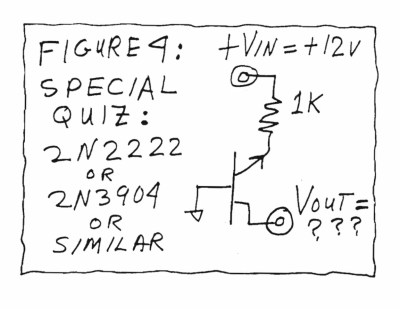
Back in 1996, Bob Pease posed an experiment in an April Fools column. “Take an ordinary NPN transistor, ground the base, pull the emitter up to 12 V with a 1 KΩ resistor and measure the collector voltage referenced to ground.” Do the experiment, and you might be surprised to find a small negative voltage present on the collector. [Filip Piorski] has always loved the riddle, and has explained how it works in a Youtube video.

The key to the trick is the breakdown voltage of the transistor; normally somewhere around 7-8 volts for a typical small NPN transistor. At this point, where the base-emitter junction enters the breakdown regime, it begins to emit light. This light actually travels through the silicon lattice, where it reaches the base-collector junction, which acts like a photodiode under the right conditions. This generates the negative voltage seen at the collector under these conditions.

Read more…

This sensory extension puppet lets you detect magnetic fields like a bird

Birds have an amazing sense of direction that aids in migrating across vast distances, and scientists think this is due to their ability to detect magnetic fields — just like a compass. Chris Hill on Instructables wanted a way to experience this for himself by using a sensor and some sort of feedback mechanism to feel a magnetic field’s directionality and strength

Read more…

The Piano Metronome is key to keeping the beat

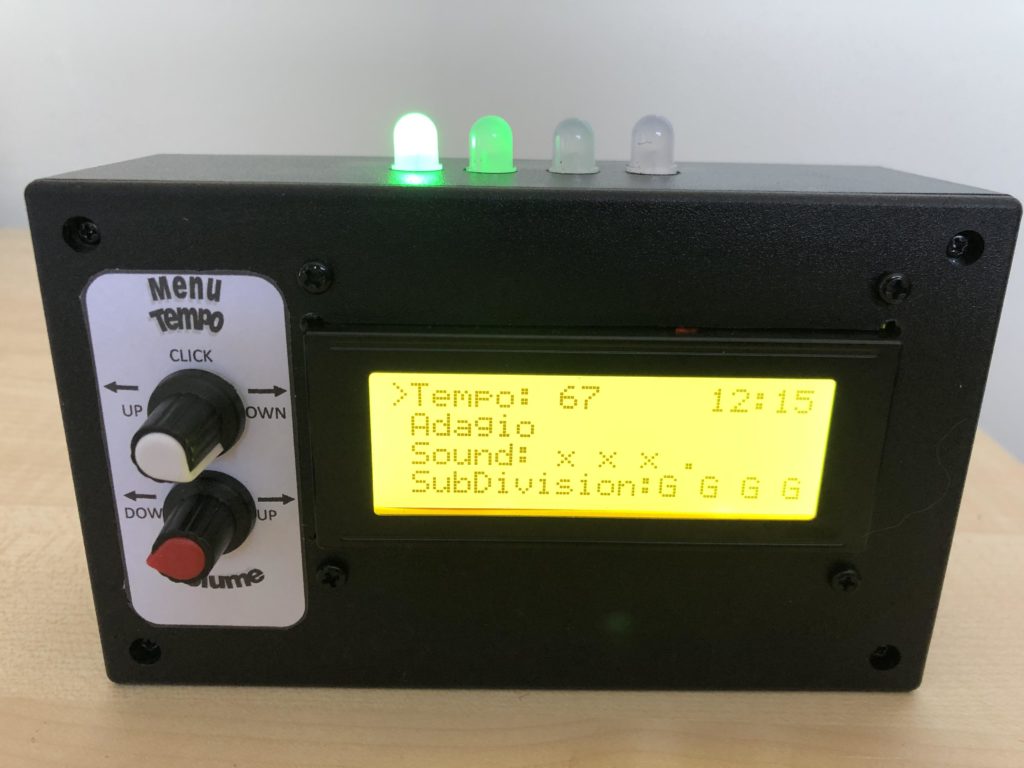
In the world of music, being able to keep time accurately is vital when playing a piece, as even small deviations in timing can cause the notes played to sound “off.” Ordinarily a device called a metronome is used to provide consistent ticks that the musician can use, but most are not that visually interesting. This is what inspired ChristineNZ over on Instructables to create her own metronome that uses an Arduino Uno to both show the beat and produce a small noise. 

Read more…

Tencent’s Robotics X Division Shows Off Ollie, a Leaping Wheeled Robot with a Clever “Tail”

Designed around two wheels on four joined “legs,” the secret to Ollie’s agility is a hidden third wheel on an extra limb.

Robotics X, the robotics research division of Chinese multinational conglomerate Tencent, has shown off a new robot dubbed Ollie — capable of performing the skateboarding trick which provided its name, by swinging around a wheeled “tail.”

Read more…