Soldering Station RT1: Portable, Hot, Rad

Portability is a big draw here. The open source soldering station RT1, created by Riccardo Pittini, offers some pretty handy features to boot.

The easy to use and portable soldering station has a simple design that uses an external power adapter with a rating of 12V/5-10A. It can also run on 7-24V batteries. Compatible with Weller RT tips, it has a 1.8” TFT full color LCD screen with two independent channels. It’s fully programmable for preset temperatures ranging from 150-450C. The micro-USB port provides required firmware updates (Arduino Pro Micro 5V 16MHz) and can be used for serial monitoring, parameter tuning and debugging.

Read more…

Make a Non-Contact Infrared Thermometer with IR Temperature Sensor

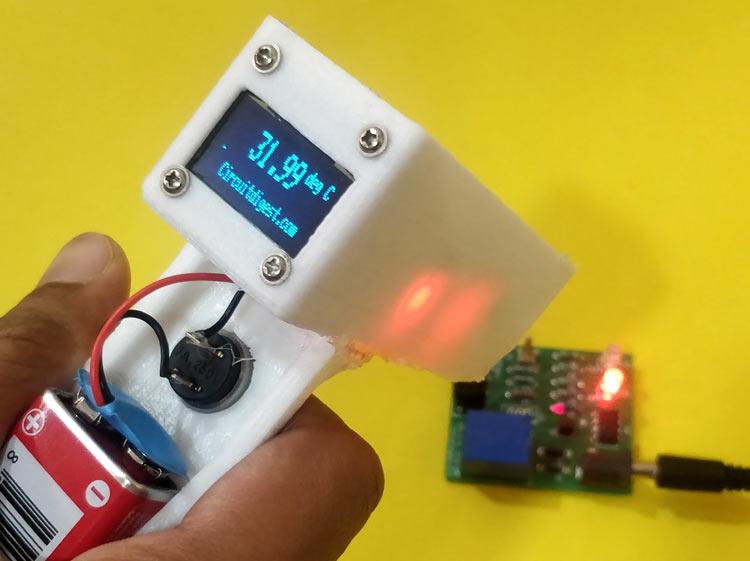
When debugging an electronics circuit or testing a new hardware design, often times I tend to check if the components on the board are getting hot abnormally by touching them. And if something is messed up (which usually is in the first try) these components could get as hot as 80°C or more burning not only the component but also my finger along with it. After burning my fingers for more times than I could remember I decided to build my own Temperature Gun using Arduino and an Infrared Temperature Sensor. This Thermal gun will be built using a non-contact temperature sensor called MLX90614; hence it can not only be used to measure component temperatures but can also be used for measuring body temperature, surface temperature, Heat ventilation and much more. Of course, these thermal guns are readily available in the market from renowned manufacturers like Fluke, Flir etc. But they are not light on your pockets and on top of that what is more fun than building your own gadgets. So let’s get started…

Read more…

How to build a Hidden Shelf Edge Clock – 3D Printable | Elegoo Arduino Nano | Smart Home | LED

I’ll show you how to build a very smart looking shelving system that includes a hidden giant clock in the edges of the shelves, and integrated LED downlighters to show off your favorite items on the shelves.

As the lighting is LED (using WS2821B ‘Neopixels’) you can choose your own colours. A discreet photoresistor also dims the LED’s when the ambient light levels drop – great for evening ambiance in any room.

Control the volume of programs running on your Windows PC like a DJ

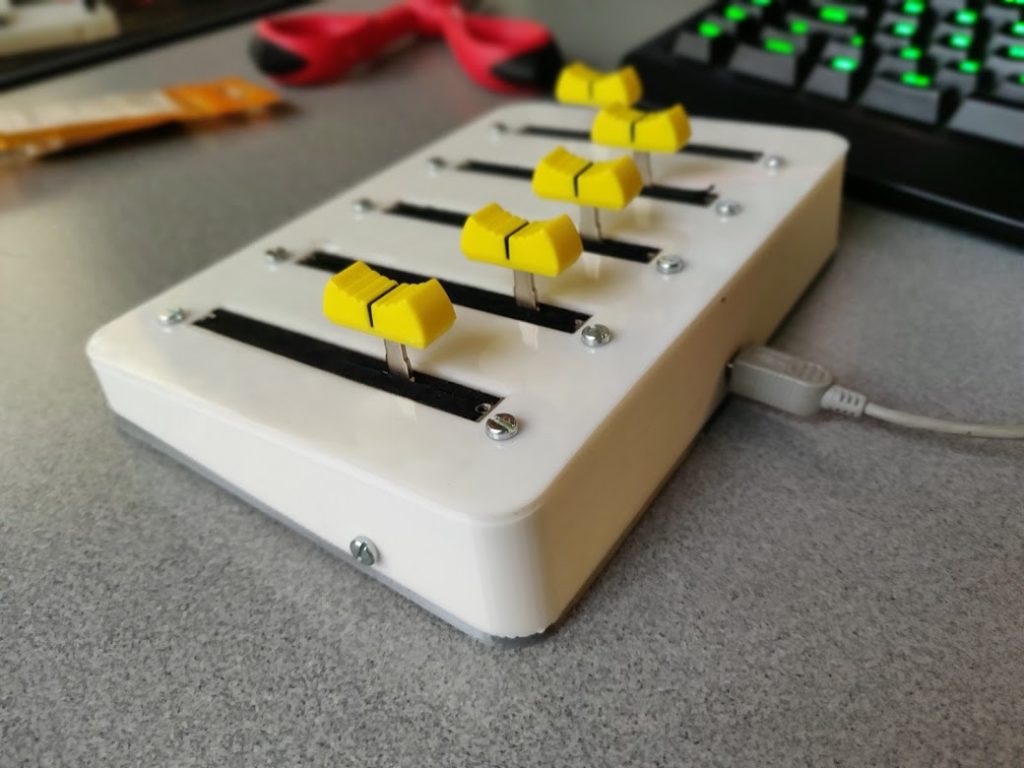
If you have multiple applications open in Windows, you may want one to be louder than the other, but what if you want to adjust levels with physical sliders like an actual DJ? If that sounds interesting, check out this controller by “Aithorn.

The device uses an Arduino Nano to read signals from each slider and pass this info over to the computer. A Python script, along with a VBScript helper, runs on the PC to control the master and program-specific volumes.

Read more…